Saturday, March 26, 2011

Apostolic Exhortation on the Sacrament of Penance - Part 19 - Pope John Paul II

CHAPTER II
"MYSTERIUM PIETATIS"

19. In order to understand sin we have had to direct our attention to its nature as made known to us by the revelation of the economy of salvation: This is the mysterium iniquitatis. But in this economy sin is not the main principle, still less the victor. Sin fights against another active principle which-to use a beautiful and evocative expression of St. Paul-we can call the mysterium or sacramentum pietatis. Man's sin would be the winner and in the end destructive, God's salvific plan would remain incomplete or even totally defeated, if this mysterium pietatis were not made part of the dynamism of history in order to conquer man's sin.

We find this expression in one of St. Paul's pastoral letters, the First Letter to Timothy. It appears unexpectedly, as if by an exuberant inspiration. The apostle had previously devoted long paragraphs of his message to his beloved disciple to an explanation of the meaning of the ordering of the community (the liturgical order and the related hierarchical one). Next he had spoken of the role of the heads of the community, before turning to the conduct of Timothy himself in the church of the living God, the pillar and bulwark of the truth." Then at the end of the passage suddenly, but with a profound purpose, he evokes the element which gives meaning to everything that he has written: "Great indeed, we confess, is the mystery of our religion."(104)

Without in the least betraying the literal sense of the text, we can broaden this magnificent theological insight of St. Paul into a more complete vision of the role which the truth proclaimed by him plays in the economy of salvation: "Great indeed," we repeat with him, "is the mystery of our religion," because it conquers sin.  But what is the meaning of this expression, in Paul's mind?

Friday, March 25, 2011

Apostolic Exhortation on the Sacrament of Penance Part 18 (Part III) - Pope John Paul II

The loss of the sense of sin is thus a form or consequence of the denial of God: not only in the form of atheism but also in the form of secularism. If sin is the breaking, off of one's filial relationship to God in order to situate one's life outside of obedience to him, then to sin is not merely to deny God. To sin is also to live as if he did not exist, to eliminate him from one's daily life. A model of society which is mutilated or distorted in one sense or another, as is often encouraged by the mass media, greatly favors the gradual loss of the sense of sin. In such a situation the obscuring or weakening of the sense of sin comes from several sources: from a rejection of any reference to the transcendent in the name of the individual's aspiration to personal independence; from acceptance of ethical models imposed by general consensus and behavior, even when condemned by the individual conscience; from the tragic social and economic conditions that oppress a great part of humanity, causing a tendency to see errors and faults only in the context of society; finally and especially, from the obscuring of the notion of God's fatherhood and dominion over man's life.

Even in the field of the thought and life of the church certain trends inevitably favor the decline of the sense of sin. For example, some are inclined to replace exaggerated attitudes of the past with other exaggerations: From seeing sin everywhere they pass to not recognizing it anywhere; from too much emphasis on the fear of eternal punishment they pass to preaching a love of God that excludes any punishment deserved by sin; from severity in trying to correct erroneous consciences they pass to a kind of respect for conscience which excludes the duty of telling the truth. And should it not be added that the confusion caused in the consciences of many of the faithful by differences of opinions and teachings in theology, preaching, catechesis and spiritual direction on serious and delicate questions of Christian morals ends by diminishing the true sense of sin almost to the point of eliminating it altogether? Nor can certain deficiencies in the practice of sacramental penance be overlooked. These include the tendency to obscure the ecclesial significance of sin and of conversion and to reduce them to merely personal matters; or vice versa, the tendency to nullify the personal value of good and evil and to consider only their community dimension. There also exists the danger, never totally eliminated, of routine ritualism that deprives the sacrament of its full significance and formative effectiveness.

The restoration of a proper sense of sin is the first way of facing the grave spiritual crisis looming over man today. But the sense of sin can only be restored through a clear reminder of the unchangeable principles of reason and faith which the moral teaching of the church has always upheld.

There are good grounds for hoping that a healthy sense of sin will once again flourish, especially in the Christian world and in the church. This will be aided by sound catechetics, illuminated by the biblical theology of the covenant, by an attentive listening and trustful openness to the magisterium of the church, which; never ceases to enlighten consciences, and by an ever more careful practice of the sacrament of penance.
 
The above picture (What's up with Us)  is of the New Divine Mercy Catholic Community of Priests in the USA...who are openly contradicting the teachings of the Church...pray for them.

Wednesday, March 23, 2011

Apostolic Exhortation on the Sacrament of Penance Part 18 (Part II) - Pope John Paul II

Another reason for the disappearance of the sense of sin in contemporary society is to be found in the errors made in evaluating certain findings of the human sciences. Thus on the basis of certain affirmations of psychology, concern to avoid creating feelings of guilt or to place limits on freedom leads to a refusal ever to admit any shortcoming. Through an undue extrapolation of the criteria of the science of sociology, it finally happens-as I have already said-that all failings are blamed upon society, and the individual is declared innocent of them. Again, a certain cultural anthropology so emphasizes the undeniable environmental and historical conditioning and influences which act upon man, that it reduces his responsibility to the point of not acknowledging his ability to perform truly human acts and therefore his ability to sin.


The sense of sin also easily declines as a result of a system of ethics deriving from a certain historical relativism. This may take the form of an ethical system which relativizes the moral norm, denying its absolute and unconditional value, and as a consequence denying that there can be intrinsically illicit acts independent of the circumstances in which they are performed by the subject. Herein lies a real "overthrowing and downfall of moral values," and "the problem is not so much one of ignorance of Christian ethics," but ignorance "rather of the meaning, foundations and criteria of the moral attitude."(103) Another effect of this ethical turning upside down is always such an attenuation of the notion of sin as almost to reach the point of saying that sin does exist, but no one knows who commits it.

Finally the sense of sin disappears when-as can happen in the education of youth, in the mass media and even in education within the family-it is wrongly identified with a morbid feeling of guilt or with the mere transgression of legal norms and precepts.

Tuesday, March 22, 2011

Apostolic Exhortation on the Sacrament of Penance - Part 18 - Pope John Paul II

The Loss of the Sense of Sin


18. Over the course of generations, the Christian mind has gained from the Gospel as it is read in the ecclesial community a fine sensitivity and an acute perception of the seeds of death contained in sin, as well as a sensitivity and an acuteness of perception for identifying them in the thousand guises under which sin shows itself. This is what is commonly called the sense of sin.

This sense is rooted in man's moral conscience and is as it were its thermometer. It is linked to the sense of God, since it derives from man's conscious relationship with God as his Creator, Lord and Father. Hence, just as it is impossible to eradicate completely the sense of God or to silence the conscience completely, so the sense of sin is never completely eliminated.

Nevertheless, it happens not infrequently in history, for more or less lengthy periods and under the influence of many different factors, that the moral conscience of many people becomes seriously clouded. "Have we the right idea of conscience?"-I asked two years ago in an address to the faithful" Is it not true that modern man is threatened by an eclipse of conscience? By a deformation of conscience? By a numbness or 'deadening' of conscience,"(97) Too many signs indicate that such an eclipse exists in our time. This is all the more disturbing in that conscience, defined by the council as "the most secret core and sanctuary of a man,"(98) is "strictly related to human freedom.... For this reason conscience, to a great extent, constitutes the basis of man's interior dignity and, at the same time, of his relationship to God."(99) It is inevitable therefore that in this situation there is an obscuring also of the sense of sin, which is closely connected with the moral conscience, the search for truth and the desire to make a responsible use of freedom. When the conscience is weakened the sense of God is also obscured, and as a result, with the loss of this decisive inner point of reference, the sense of sin is lost. This explains why my predecessor Pius XI, one day declared, in words that have almost become proverbial, that "the sin of the century is the loss of the sense of sin."(100)

Why has this happened in our time. A glance at certain aspects of contemporary culture can help us to understand the progressive weakening of the sense of sin, precisely because of the crisis of conscience and crisis of the sense of God already mentioned.


"Secularism" is by nature and definition a movement of ideas and behavior which advocates a humanism totally without God, completely centered upon the cult of action and production and caught up in the heady enthusiasm of consumerism and pleasure seeking, unconcerned with the danger of "losing one's soul." This secularism cannot but undermine the sense of sin. At the very most, sin will be reduced to what offends man. But it is precisely here that we are faced with the bitter experience which I already alluded to in my first encyclical namely, that man can build a world without God, but this world will end by turning against him."(101) In fact, God is the origin and the supreme end of man, and man carries in himself a divine seed.(102) Hence it is the reality of God that reveals and illustrates the mystery of man. It is therefore vain to hope that there will take root a sense of sin against man and against human values, if there is no sense of offense against God, namely the true sense of sin.

Monday, March 21, 2011

Apostolic Exhortation on the Sacrament of Penance - Part 17 (Part IV) - Pope John Paul II

With the whole tradition of the church, we call mortal sin the act by which man freely and consciously rejects God, his law, the covenant of love that God offers, preferring to turn in on himself or to some created and finite reality, something contrary to the divine will (conversio ad creaturam). This can occur in a direct and formal way in the sins of idolatry, apostasy and atheism; or in an equivalent way as in every act of disobedience to God's commandments in a grave matter. Man perceives that this disobedience to God destroys the bond that unites him with his life principle: It is a mortal sin, that is, an act which gravely offends God and ends in turning against man himself with a dark and powerful force of destruction.

During the synod assembly some fathers proposed a threefold distinction of sins, classifying them as venial, grave and mortal. This threefold distinction might illustrate the fact that there is a scale of seriousness among grave sins. But it still remains true that the essential and decisive distinction is between sin which destroys charity and sin which does not kill the supernatural life: There is no middle way between life and death.
Likewise, care will have to be taken not to reduce mortal sin to an act of " fundamental option"-as is commonly said today-against God, intending thereby an explicit and formal contempt for God or neighbor.

For mortal sin exists also when a person knowingly and willingly, for whatever reason, chooses something gravely disordered. In fact, such a choice already includes contempt for the divine law, a rejection of God's love for humanity and the whole of creation; the person turns away from God and loses charity. Thus the fundamental orientation can be radically changed by individual acts. Clearly there can occur situations which are very complex and obscure from a psychological viewpoint and which have an influence on the sinner's subjective culpability. But from a consideration of the psychological sphere one cannot proceed to the construction of a theological category, which is what the "fundamental option" precisely is, understanding it in such a way that it objectively changes or casts doubt upon the traditional concept of mortal sin.

While every sincere and prudent attempt to clarify the psychological and theological mystery of sin is to be valued, the church nevertheless has a duty to remind all scholars in this field of the need to be faithful to the word of God that teaches us also about sin. She likewise has to remind them of the risk of contributing to a further weakening of the sense of sin in the modern world.

Sunday, March 20, 2011

Apostolic Exhortation on the Sacrament of Penance - Part 17 (Part III) - Pope John Paul II

Furthermore, when sin is considered from the point of view of the punishment it merits, for St. Thomas and other doctors mortal sin is the sin which, if unforgiven, leads to eternal punishment; whereas venial sin is the sin that merits merely temporal punishment (that is, a partial punishment which can be expiated on earth or in purgatory).

Considering sin from the point of view of its matter, the ideas of death, of radical rupture with God, the supreme good, of deviation from the path that leads to God or interruption of the journey toward him (which are all ways of defining mortal sin) are linked with the idea of the gravity of sin's objective content. Hence, in the church's doctrine and pastoral action, grave sin is in practice identified with mortal sin.

Here we have the core of the church's traditional teaching, which was reiterated frequently and vigorously during the recent synod. The synod in fact not only reaffirmed the teaching of the Council of Trent concerning the existence and nature of mortal and venial sins,(95) but it also recalled that mortal sin is sin whose object is grave matter and which is also committed with full knowledge and deliberate consent. It must be added-as was likewise done at the synod-that some sins are intrinsically grave and mortal by reason of their matter. That is, there exist acts which, per se and in themselves, independently of circumstances, are always seriously wrong by reason of their object. These acts, if carried out with sufficient awareness and freedom, are always gravely sinful.(96)

This doctrine, based on the Dccalogue and on the preaching of the Old Testament, and assimilated into the kerygma of the apostles and belonging to the earliest teaching of the church, and constantly reaffirmed by her to this day, is exactly verified in the experience of the men and women of all times. Man knows well by experience that along the road of faith and justice which leads to the knowledge and love of God in this life and toward perfect union with him in eternity, he can cease to go forward or can go astray without abandoning the way of God; and in this case there occurs venial sin. This however must never be underestimated, as though it were automatically something that can be ignored or regarded as "a sin of little importance."

For man also knows, through painful experience, that by a conscious and free act of his will he can change course and go in a direction opposed to God's will, separating himself from God (aversio a Deo), rejecting loving communion with him, detaching himself from the life principle which God is and consequently choosing death.

Saturday, March 19, 2011

Apostolic Exhortation on the Sacrament of Penance - Part 17 (Part II) - Pope John Paul II


Here of course it is a question of external radical manifestations: rejection of God, rejection of his grace and therefore opposition to the very source of salvation(89)-these are manifestations whereby a person seems to exclude himself voluntarily from the path of forgiveness. It is to be hoped that very few persist to the end in this attitude of rebellion or even defiance of God. Moreover, God in his merciful love is greater than our hearts, as St. John further teaches us,(90) and can overcome all our psychological and spiritual resistance. So that, as St. Thomas writes, "considering the omnipotence and mercy of God, no one should despair of the salvation of anyone in this life."(91)


But when we ponder the problem of a rebellious will meeting the infinitely just God, we cannot but experience feelings of salutary "fear and trembling," as St. Paul suggests.(92) Moreover, Jesus' warning about the sin "that will not be forgiven" confirms the existence of sins which can bring down on the sinner the punishment of "eternal death."


In the light of these and other passages of sacred Scripture, doctors and theologians, spiritual teachers and pastors have divided sins into mortal and venial. St. Augustine, among others, speaks of letalia or mortifera crimina, contrasting them with venialia, levia or quotidiana.(93) The meaning which he gives to these adjectives was to influence the successive magisterium of the church. After him, it was St. Thomas who was to formulate in the clearest possible terms the doctrine which became a constant in the church.


In defining and distinguishing between mortal and venial sins, St. Thomas and the theology of sin that has its source in him could not be unaware of the biblical reference and therefore of the concept of spiritual death. According to St. Thomas, in order to live spiritually man must remain in communion with the supreme principle of life, which is God, since God is the ultimate end of man' s being and acting. 


Now sin is a disorder perpetrated by the human being against this life-principle. And when through sin, the soul commits a disorder that reaches the point of turning away form its ultimate end God to which it is bound by charity, then the sin is mortal; on the other hand, whenever the disorder does not reach the point of a turning away from God, the sin is venial."(94) For this reason venial sin does not deprive the sinner of sanctifying grace, friendship with God, charity and therefore eternal happiness, whereas just such a deprivation is precisely the consequence of mortal sin.

Friday, March 18, 2011

Apostolic Exhortation on the Sacrament of Penance - Part 17 (Part 1) - Pope John Paul II

Mortal and Venial

17. But here we come to a further dimension in the mystery of sin, one on which the human mind has never ceased to ponder: the question of its gravity. It is a question which cannot be overlooked and one which the Christian conscience has never refused to answer. Why and to what degree is sin a serious matter in the offense it commits against God and in its effects on man? The church has a teaching on this matter which she reaffirms in its essential elements, while recognizing that it is not always easy in concrete situations to define clear and exact limits.

Already in the Old Testament, individuals guilty of several kinds of sins - sins committed deliberately,(75) the various forms of impurity,(76) idolatry,(77) the worship of false gods (78) - were ordered to be "taken away from the people," which could also mean to be condemned to death.(79) Contrasted with these were other sins especially sins committed through ignorance, that were forgiven by means of a sacrificial offering.(80)

In reference also to these texts, the church has for centuries spoken of mortal sin and venial sin. But it is above all the New Testament that sheds light on this distinction and these terms. Here there are many passages which enumerate and strongly reprove sins that are particularly deserving of condemnation.(81) There is also the confirmation of the Decalogue by Jesus himself.(82) Here I wish to give special attention to two passages that are significant and impressive.

In a text of his First Letter, St. John speaks of a sin which leads to death (pros thanaton), as opposed to a sin which does not lead to death (me pros thanaton).(83) Obviously, the concept of death here is a spiritual death. It is a question of the loss of the true life or "eternal life," which for John is knowledge of the Father and the Son,(84) and communion and intimacy with them. In that passage the sin that leads to death seems to be the denial of the Son(85) or the worship of false gods.(86) At any rate, by this distinction of concepts John seems to wish to emphasize the incalculable seriousness of what constitutes the very essence of sin, namely the rejection of God. This is manifested above all in apostasy and idolatry: repudiating faith in revealed truth and making certain created realities equal to God, raising them to the status of idols or false gods.(87) But in this passage the apostle's intention is also to underline the certainty that comes to the Christian from the fact of having been "born of God" through the coming of the Son: The Christian possesses a power that preserves him from falling into sin; God protects him, and "the evil one does not touch him." If he should sin through weakness or ignorance, he has confidence in being forgiven, also because he is supported by the joint prayer of the community.

In another passage of the New Testament, namely in St. Matthew's Gospel,(88)Jesus himself speaks of a "blasphemy against the Holy Spirit" that " will not be forgiven" by reason of the fact that in its manifestation, it is an obstinate refusal to be converted to the love of the Father of mercies.

Thursday, March 17, 2011

Apostolic Exhortation on the Sacrament of Penance - Part 16 (part 3) - Pope John Paul II

Having said this in the clearest and most unequivocal way, one must add at once that there is one meaning sometimes given to social sin that is not legitimate or acceptable even though it is very common in certain quarters today.(74) This usage contrasts social sin and personal sin, not without ambiguity, in a way that leads more or less unconsciously to the watering down and almost the abolition of personal sin, with the recognition only of social gilt and responsibilities. According to this usage, which can readily be seen to derive from non-Christian ideologies and systems-which have possibly been discarded today by the very people who formerly officially upheld them-practically every sin is a social sin, in the sense that blame for it is to be placed not so much on the moral conscience of an individual, but rather on some vague entity or anonymous collectivity such as the situation, the system, society, structures or institutions.

Whenever the church speaks of situations of sin or when the condemns as social sins certain situations or the collective behavior of certain social groups, big or small, or even of whole nations and blocs of nations, she knows and she proclaims that such cases of social sin are the result of the accumulation and concentration of many personal sins. It is a case of the very personal sins of those who cause or support evil or who exploit it; of those who are in a position to avoid, eliminate or at least limit certain social evils but who fail to do so out of laziness, fear or the conspiracy of silence, through secret complicity or indifference; of those who take refuge in the supposed impossibility of changing the world and also of those who sidestep the effort and sacrifice required, producing specious reasons of higher order. The real responsibility, then, lies with individuals.
A situation-or likewise an institution, a structure, society itself-is not in itself the subject of moral acts. Hence a situation cannot in itself be good or bad.

At the heart of every situation of sin are always to be found sinful people. So true is this that even when such a situation can be changed in its structural and institutional aspects by the force of law or-as unfortunately more often happens by the law of force, the change in fact proves to be incomplete, of short duration and ultimately vain and ineffective-not to say counterproductive if the people directly or indirectly responsible for that situation are not converted.

Wednesday, March 16, 2011

Apostolic Exhortation on the Sacrament of Penance - Part 16 (part 2) - Pope John Paul II

 Some sins, however, by their very matter constitute a direct attack on one's neighbor and more exactly, in the language of the Gospel, against one's brother or sister. They are an offense against God because they are offenses against one's neighbor. These sins are usually called social sins, and this is the second meaning of the term. In this sense social sin is sin against love of neighbor, and in the law of Christ it is all the more serious in that it involves the Second Commandment, which is "like unto the first."(72) Likewise, the term social applies to every sin against justice in interpersonal relationships, committed either by the individual against the community or by the community against the individual. Also social is every sin against the rights of the human person, beginning with the right to nd including the life of the unborn or against a person's physical integrity. 


Likewise social is every sin against others' freedom, especially against the supreme freedom to believe in God and adore him; social is every sin against the dignity and honor of one's neighbor. Also social is every sin against the common good and its exigencies in relation to the whole broad spectrum of the rights and duties of citizens. The term social can be applied to sins of commission or omission-on the part of political, economic or trade union leaders, who though in a position to do so, do not work diligently and wisely for the improvement and transformation of society according to the requirements and potential of the given historic moment; as also on the part of workers who through absenteeism or non-cooperation fail to ensure that their industries can continue to advance the well-being of the workers themselves, of their families and of the whole of society.
The third meaning of social sin refers to the relationships between the various human communities. 

These relationships are not always in accordance with the plan of God, who intends that there be justice in the world and freedom and peace between individuals, groups and peoples. Thus the class struggle, whoever the person who leads it or on occasion seeks to give it a theoretical justification, is a social evil. Likewise obstinate confrontation between blocs of nations, between one nation and another, between different groups within the same nation all this too is a social evil. In both cases one may ask whether moral responsibility for these evils, and therefore sin, can be attributed to any person in particular. Now it has to be admitted that realities and situations such as those described, when they become generalized and reach vast proportions as social phenomena, almost always become anonymous, just as their causes are complex and not always identifiable. Hence if one speaks of social sin here, the expression obviously has an analogical meaning. However, to speak even analogically of social sins must not cause us to underestimate the responsibility of the individuals involved. It is meant to be an appeal to the consciences of all, so that each may shoulder his or her responsibility seriously and courageously in order to change those disastrous conditions and intolerable situations.

Tuesday, March 15, 2011

Apostolic Exhortation on the Sacrament of Penance - Part 16 - Pope John Paul II

Personal Sin and Social Sin

16. Sin, in the proper sense, is always a personal act, since it is an act of freedom on the part of an individual person and not properly of a group or community. This individual may be conditioned, incited and influenced by numerous and powerful external factors. He may also be subjected to tendencies, defects and habits linked with his personal condition. In not a few cases such external and internal factors may attenuate, to a greater or lesser degree, the person's freedom and therefore his responsibility and guilt. But it is a truth of faith, also confirmed by our experience and reason, that the human person is free. This truth cannot be disregarded in order to place the blame for individuals' sins on external factors such as structures, systems or other people. Above all, this would be to deny the person's dignity and freedom, which are manifested-even though in a negative and disastrous way-also in this responsibility for sin committed. Hence there is nothing so personal and untransferable in each individual as merit for virtue or responsibility for sin.
As a personal act, sin has its first and most important consequences in the sinner himself: that is, in his relationship with God, who is the very foundation of human life; and also in his spirit, weakening his will and clouding his intellect.

At this point we must ask what was being referred to by those who during the preparation of the synod and in the course of its actual work frequently spoke of social sin. The expression and the underlying concept in fact have various meanings. 

To speak of social sin means in the first place to recognize that, by virtue of human solidarity which is as mysterious and intangible as it is real and concrete, each individual's sin in some way affects others. This is the other aspect of that solidarity which on the religious level is developed in the profound and magnificent mystery of the communion of saints, thanks to which it has been possible to say that "every soul that rises above itself, raises up the world." To this law of ascent there unfortunately corresponds the law of descent. Consequently one can speak of a communion of sin, whereby a soul that lowers itself through sin drags down with itself the church and, in some way, the whole world. In other words, there is no sin, not even the most intimate and secret one, the most strictly individual one, that exclusively concerns the person committing it. With greater or lesser violence, with greater or lesser harm, every sin has repercussions on the entire ecclesial body and the whole human family. According to this first meaning of the term, every sin can undoubtedly be considered as social sin.

Monday, March 14, 2011

Apostolic Exhortation on the Sacrament of Penance - Part 15. - Pope John Paul II

Division Between Brothers

15. In the biblical narratives mentioned above, man's rupture with God leads tragically to divisions between brothers.

In the description of the "first sin," the rupture with Yahweh simultaneously breaks the bond of friendship that had united the human family. Thus the subsequent pages of Genesis show us the man and the woman as it were pointing an accusing finger at each other.(70) Later we have the brother hating his brother and finally taking his life.(71)

According to the Babel story, the result of sin is the shattering of the human family, already begun with the first sin and now reaching its most extreme form on the social level.

No one wishing to investigate the mystery of sin can ignore this link between cause and effect. As a rupture with God, sin is an act of disobedience by a creature who rejects, at least implicitly, the very one from whom he came and who sustains him in life. It is therefore a suicidal act. Since by sinning man refuses to submit to God, his internal balance is also destroyed and it is precisely within himself that contradictions and conflicts arise. Wounded in this way, man almost inevitably causes damage to the fabric of his relationship with others and with the created world. This is an objective law and an objective reality, verified in so many ways in the human psyche and in the spiritual life as well as in society, where it is easy to see the signs and effects of internal disorder.

The mystery of sin is composed of this twofold wound which the sinner opens in himself and in his relationship with his neighbor. Therefore one can speak of personal and social sin: From one point of view, every sin is personal; from another point of view, every sin is social insofar as and because it also has social repercussions.

Sunday, March 13, 2011

Apostolic Exhortation on the Sacrament of Penance Part 14. - Pope John Paul II

CHAPTER ONE

THE MYSTERY OF SIN

14 If we read the passage in the Bible on the city and tower of Babel in the new light offered by the Gospel and if we compare it with the other passage on the fall of our first parents, we can draw from it valuable elements for an understanding of the mystery of sin. This expression, which echoes what St. Paul writes concerning the mystery of evil,(66) helps us to grasp the obscure and intangible element hidden in sin. Clearly sin is a product of man's freedom. But deep within its human reality there are factors at work which place it beyond the merely human, in the border area where man's conscience, will and sensitivity are in contact with the dark forces which, according to St. Paul, are active in the world almost to the point of ruling it.(67)

Disobedience to God

A first point which helps us to understand sin emerges from the biblical narrative on the building of the tower of Babel: The people sought to build a city, organize themselves into a society and to be strong and powerful without God, if not precisely against God.(68) In this sense the story of the first sin in Eden and the story of Babel, in spite of notable differences in content and form, have one thing in common: In both there is an exclusion of God through direct opposition to one of his commandments, through an act of rivalry, through the mistaken pretension of being "like him."(69) In the story of Babel the exclusion of God is presented not so much under the aspect of opposition to him as of forgetfulness and indifference toward him, as if God were of no relevance in the sphere of man's joint projects. But in both cases the relationship to God is severed with violence. In the case of Eden there appears in all its seriousness and tragic reality that which constitutes the ultimate essence and darkness of sin: disobedience to God, to His law, to the mural norm that he has given man, inscribing it in his heart and confirming and perfecting it through revelation.

Exclusion of God, rupture with God, disobedience to God: Throughout the history of mankind this has been and is, in various forms, sin. It can go as far as a very denial of God and his existence: This is the phenomenon called atheism.

It is the disobedience of a person who, by a free act, does not acknowledge God's sovereignty over his or her life, at least at that particular moment in which he or she transgresses God's law.

Saturday, March 12, 2011

Pray for the Japanese People......


Let us remember today all those who died and those who are now suffering as a result of the terrible earthquake and tsunami in Japan yesterday.  Lord have mercy....

Apostolic Exhortation on the Sacrament of Penance Part 13. - Pope John Paul II

PART TWO

THE LOVE THAT IS GREATER THAN SIN

The Tragedy of Man

13. In the words of St. John the apostle, "If we say we have no sin, we deceive ourselves, and the truth is not in us. If we confess our sins, he is faithful and just and will forgive our sins."(56) Written at the very dawn of the church, these inspired words introduce better than any other human expression the theme of sin, which is intimately connected with that of reconciliation. These words present the question of sin in its human dimension: sin as an integral part of the truth about man. But they immediately relate the human dimension to its divine dimension, where sin is countered by the truth of divine love, which is just, generous and faithful, and which reveals itself above all in forgiveness and redemption. Thus St. John also writes a little further on that "whatever accusations (our conscience) may raise against us, God is greater than our conscience."(57)

To acknowledge one's sin, indeed-penetrating still more deeply into the consideration of one's own personhood-to recognize oneself as being a sinner, capable of sin and inclined to commit sin, is the essential first step in returning to God. For example, this is the experience of David, who "having done what is evil in the eyes of the Lord" and having been rebuked by the prophet Nathan,(58) exclaims: "For I know my transgressions, and my sin is ever before me. Against you, you alone, have I sinned and done what is evil in your sight."(59) Similarly, Jesus himself puts the following significant words on the lips and in the heart of the prodigal son: "Father, I have sinned against heaven and before you."(60)

In effect, to become reconciled with God presupposes and includes detaching oneself consciously and with determination from the sin into which one has fallen. It presupposes and includes, therefore, doing penance in the fullest sense of the term: repenting, showing this repentance, adopting a real attitude of repentance- which is the attitude of the person who starts out on the road of return to the Father. This is a general law and one which each individual must follow in his or her particular situation. For it is not possible to deal with sin and conversion only in abstract terms.

In the concrete circumstances of sinful humanity, in which there can be no conversion without the acknowledgment of one's own sin, the church's ministry of reconciliation intervenes in each individual case with a precise penitential purpose. That is, the church's ministry intervenes in order to bring the person to the "knowledge of self"-in the words of St. Catherine of Siena(61)-to the rejection of evil, to the re-establishment of friendship with God, to a new interior ordering, to a fresh ecclesial conversion. Indeed, even beyond the boundaries of the church and the community of believers, the message and ministry of penance are addressed to all men and women, because all need conversion and reconciliation.(62)
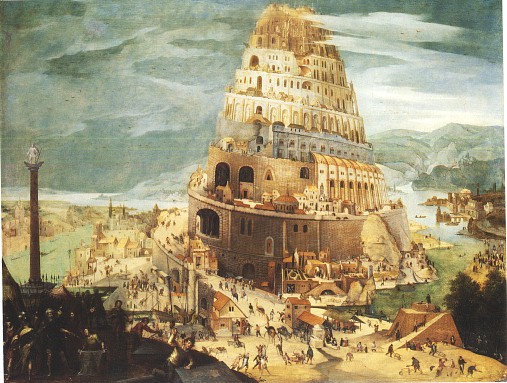
In order to carry out this penitential ministry adequately, we shall have to evaluate the consequences of sin with "eyes enlightened"(63) by faith. These consequences of sin are the reasons for division and rupture not only within each person, but also within the various circles of a person's life: in relation to the family, to the professional and social environment, as can often be seen from experience; it is confirmed by the passage in the Bible about the city of Babel and its tower.(64) Intent on building what was to be at once a symbol and a source of unity, those people found themselves more scattered than before, divided in speech, divided among themselves, incapable of consensus and agreement.

Why did the ambitious project fail? Why did "the builders labor in vain?"(65) They failed because they had set up as a sign and guarantee of the unity they desired a work of their own hands alone and had forgotten the action of the Lord. They had attended only to the horizontal dimension of work and social life, forgetting the vertical dimension by which they would have been rooted in God, their creator and Lord, and would have been directed toward him as the ultimate goal of their progress.

Now it can be said that the tragedy of humanity today, as indeed of every period in history, consists precisely in its similarity to the experience of Babel.